Sanyo Shokai (TSE:8011), the department-store apparel group behind brands sold through tie-ups like Paul Stuart and Mackintosh London, posted an operating loss of JPY 499 million for the first half of the fiscal year ending February 2027, more than double the JPY 213 million loss of a year earlier. Revenue fell 4.0% to JPY 25.95 billion, the second consecutive year of decline. The company’s full-year forecast is unchanged. Over the same period, it raised its dividend policy and ran one of its largest-ever share buybacks — moves that track, almost step for step, what an activist shareholder had been publicly demanding.
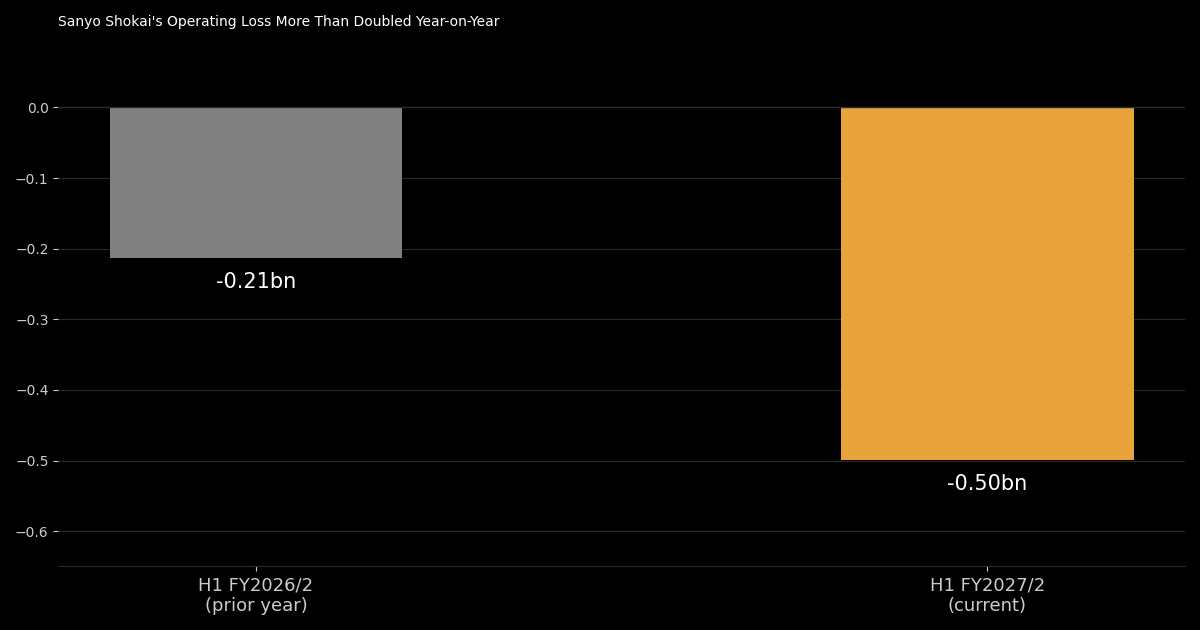 Figure 1: H1 operating loss, FY2026/2 vs FY2027/2 (company earnings filing).
A strength the company doesn’t own
Sanyo Shokai reports a single apparel segment built almost entirely around department stores, including multi-brand “SANYO Style STORE” shops and relationship-based “gaisho” sales to department stores’ own high-spending client lists. That client relationship is an asset of the department store, not of Sanyo Shokai — if a store closes or reallocates floor space, the brand has no direct lever over it.
The filing’s own explanation for the quarter fits that exposure. Loyal, existing customers actually spent more than a year earlier. The shortfall came from “free” walk-in shoppers cutting back as price inflation squeezed real incomes, compounded by a falling number of department store locations to sell through. Gross margin held roughly flat on tighter discounting, and cost control kept SG&A below last year’s level — but neither could offset the lost revenue.
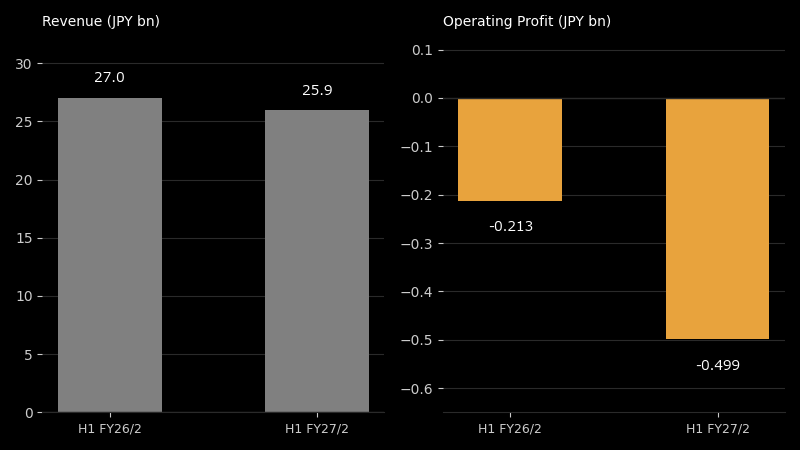 Figure 2: Revenue and operating profit, H1 comparison (company earnings filing).
The quarter got worse, not better
The first quarter alone was still profitable, with operating profit of JPY 113 million. That means the second quarter on its own swung to a loss of roughly JPY 612 million — a sharp deterioration within the same half, not a one-off dip.
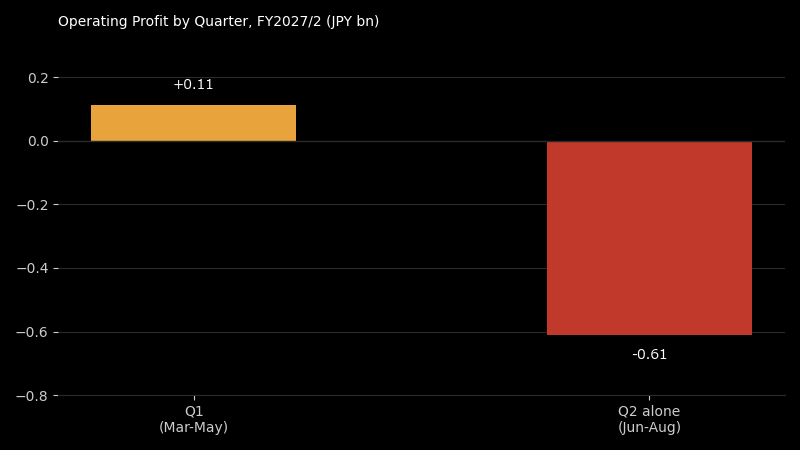 Figure 3: Operating profit by quarter, FY2027/2 (company earnings filing).
Despite that trajectory, Sanyo Shokai left its full-year guidance of JPY 4.02 billion in net profit unchanged. Starting from a first-half net loss of JPY 555 million, hitting that target requires roughly JPY 4.6 billion of net profit in the second half alone — more than the company has earned in a full year recently. The filing offers no specific basis for that recovery, only standard boilerplate about forecast uncertainty.
Capital returns move the opposite way
The dividend and buyback decisions look less like management’s own call and more like a running settlement with an activist shareholder. Chicago-based Sapphireterra Capital, which has invested in Sanyo Shokai since 2017 through predecessor funds and now holds roughly 7% of shares, has spent the past year publicly pushing the company toward exactly the capital returns it has since delivered.
In October 2025, Sanyo Shokai’s board approved an off-market buyback of 500,000 shares for JPY 1.64 billion through the ToSTNeT-3 system, at the specific request of Yagi Shosha, the trading-house shareholder and business partner that holds about 13% of the stock. Sapphireterra called the deal unfair to ordinary shareholders — an off-market repurchase benefits whoever sells into it, not all holders equally — and publicly urged the board to instead run an open, on-market buyback of up to 1 million shares (JPY 4 billion) before the end of November 2025, cancelling the shares once repurchased.
That specific request wasn’t met on that timeline. Instead, Sapphireterra escalated: at the 83rd annual general meeting on May 28, 2026, it put forward a shareholder proposal for a special dividend of JPY 1,200 per share, roughly JPY 12 billion in total. Its case against management went beyond capital policy — the fund argued that roughly JPY 2 billion had been consumed as excess inventory over the prior two years through a “mistaken growth strategy involving excessive brand launches.” The board opposed the dividend proposal, arguing it would jeopardize planned growth investment, and the company’s own dividend resolution that went to shareholders was its regular JPY 70 per share. A little over a month later, on June 30, the company raised its dividend policy from a 4% to a 5% dividend-on-equity (DOE) ratio. In August, it ran an on-market buyback of 2.7 million shares for about JPY 4.58 billion — larger than what Sapphireterra had originally asked for and nine months later than the original deadline, but structurally the open-market purchase the fund had been demanding since October 2025.
None of this required the business to recover. The DOE policy increase and the buyback both landed inside the same window as a widening operating loss, with no change to the underlying operations that produced it. Read next to the half-year results, these look like concessions to a shareholder with a public track record of contesting the company’s capital allocation, not a reward for improved performance. A second fund has also passed through the share register during this period: UK activist Asset Value Investors Limited became Sanyo Shokai’s largest shareholder on February 28, 2026, before Yagi Shosha regained the top spot roughly six months later. Whatever happens next with Sapphireterra’s campaign, Sanyo Shokai is now setting capital policy in public, in front of shareholders willing to contest it.
On October 6 — the same day as the earnings release — the company also cut its forecast year-end dividend from JPY 36.00 to JPY 31.00 per share. That looks worse than it is: Sanyo Shokai executed a 1-for-3 stock split on September 1, so the two figures aren’t on the same share count. Rebased to the pre-split count, the new forecast is equivalent to about JPY 93, versus JPY 70 paid out a year earlier — a real increase. The company attributes the revision to the August buyback shrinking shareholders’ equity, the denominator in its DOE formula, not to weaker results.
The industry isn’t offering an exit either
Department stores look healthy on the surface — nationwide same-store sales rose for a sixth straight month in June 2026, up 2.3% year-on-year — but that growth is concentrated in duty-free sales to foreign tourists. Domestic sales alone fell 0.2% in the same month, the first decline in 11 months. Duty-free’s share of sales at Matsuya Ginza has risen from 25% before the pandemic to as much as 40% in peak months, and Mitsukoshi Isetan’s duty-free sales are up 45% versus pre-pandemic levels. That growth is a function of the yen and tourist arrivals, not domestic demand for department-store apparel.
Shopping centers, meanwhile, posted record combined sales of JPY 33.1 trillion in 2025, even as new SC openings fell to a record low because of construction costs. The number of department store operators tracked by industry surveys fell from 70 to 58 over five years, and four prefectures now have no department store at all. Among the 58 major operators, combined FY2025 revenue fell 2.7% to JPY 2.06 trillion and combined net profit fell 24.6% to JPY 111.3 billion, with more than 80% of them posting lower revenue.
What to watch
The real test is whether Sanyo Shokai formally cuts its full-year guidance before the Q3 results, given the gap between the first-half trajectory and the unchanged forecast. Also worth tracking: what Sapphireterra and other shareholders push for at the next general meeting, whether Asset Value Investors returns as a shareholder, and whether domestic, ex-inbound department store sales keep slipping the way they did in June. Sanyo Shokai’s capital returns address shareholders. They don’t address the channel its business depends on.
Source: Sanyo Shokai Q2 FY2027/2 earnings filing (TDnet) | Sanyo Shokai dividend forecast revision (TDnet) | Department stores and inbound demand | Duty-free sales ratios | Shopping center sales hit record high | Department store closures and FY2025 results | Sanyo Shokai largest shareholder change | Sapphireterra’s special dividend proposal | Sapphireterra calls October 2025 buyback unfair, demands on-market purchase | 日本語版
Disclaimer | This article is for informational purposes only and does not constitute investment advice. Financial figures are AI-extracted and may contain errors — always verify against the original filing.