On the headline numbers, Kasumigaseki Capital (TSE:3498) had an excellent year. Revenue for the year to August 2026 rose 69.7% to JPY 163.8 billion. Operating profit rose 47.2% to JPY 27.9 billion, ahead of the company’s own JPY 26.5 billion forecast. For FY2027 it guides revenue of JPY 220 billion and operating profit of JPY 41.0 billion, another 47% increase.
The share price is less enthusiastic. At JPY 7,410 on October 5, the stock sits below the JPY 7,718 price of its November 2025 public offering. On the company’s own FY2027 net profit forecast of JPY 24.0 billion, it trades at under 8 times earnings. The market is not paying full price for this growth, and following the money shows why.
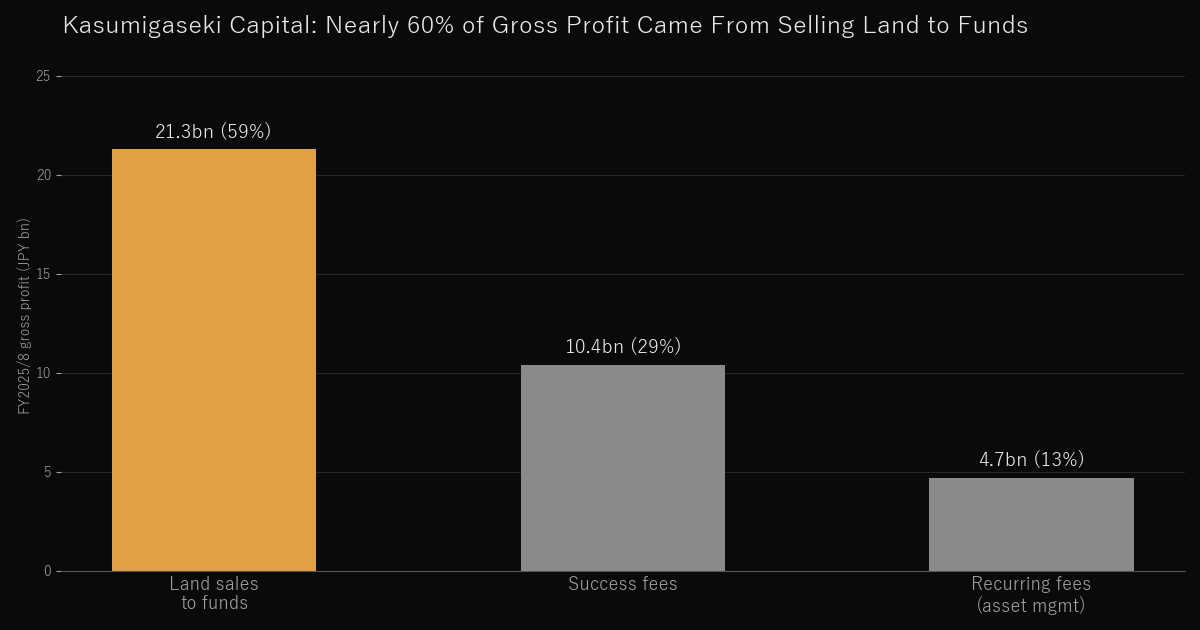 Figure 1: FY2025/8 gross profit by source (company results presentation).
What the company does
Kasumigaseki Capital develops property aimed at specific social problems. It builds cold-storage warehouses that use natural refrigerants (LOGI FLAG), hotels designed for groups (fav, seven x seven), hospice housing for end-of-life care (CLASWELL), and overseas projects in the US, Malaysia and Dubai. In August 2026 it began its first data center project, on a site in Zama, Kanagawa with a 42 MW high-voltage power application already in place.
The businesses address real gaps. Japan’s cold-storage industry has known about ozone-depleting refrigerants since the 1987 Montreal Protocol, yet in 2021 about 46% of warehouses still ran on the older R22 refrigerant, because rebuilding was too expensive for existing operators. Kasumigaseki Capital took that capital burden on as a property developer, building new warehouses and leasing them out.
The people running it are fund professionals rather than operators. CEO Kawamoto moved from construction management into real-estate funds and later handled investors and transactions at the Japan arm of Grosvenor, the UK property group. Chairman and largest shareholder Ogawa worked at Mitsui Fudosan’s brokerage arm and Credit Suisse’s principal investments unit. The company began in 2011 by rebuilding an earthquake-damaged shopping center in Sendai, and has since moved through solar power, hotels and warehouses. The pattern has stayed the same throughout: find a social problem, turn it into an investment product, and sell it to a fund.
How the money moves
The company describes four stages. It buys land on its own balance sheet for about six months. It sells that land to a development fund backed by outside investors, booking a land-sale gain. It sells the finished building to a REIT or private fund, earning a success fee. Then it collects ongoing asset-management fees.
Selling land to a funded vehicle before construction keeps inventory risk short. It also means most profit is one-off and recognized at the point of sale. Of FY2025/8 gross profit of JPY 36.4 billion, land-sale gains were about JPY 21.3 billion, nearly 60%. Recurring management fees were only about JPY 4.7 billion, or 13%. The cash flow statement also shows JPY 6.2 billion of income from investment stakes the company retained in funds it sold into.
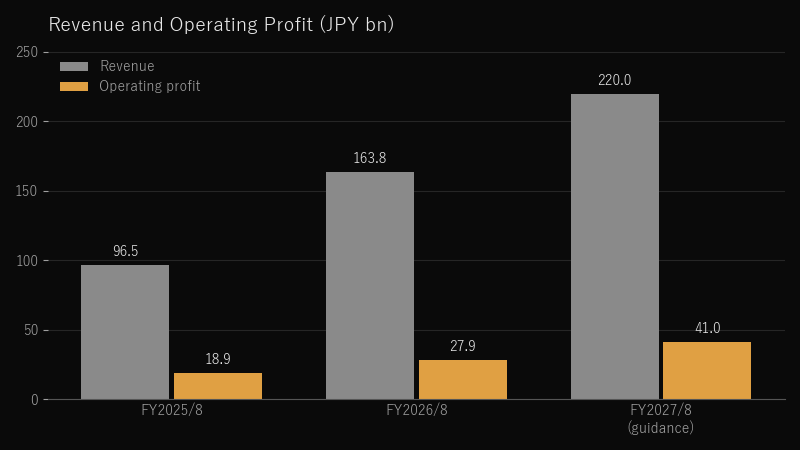 Figure 2: Revenue and operating profit. FY2025/8 revenue is derived from the reported growth rate.
Each step of growth needs fresh capital. Operating cash flow in FY2026/8 was negative JPY 16.8 billion as property for sale rose by JPY 28.5 billion. Fixed assets rose by JPY 33.2 billion. These were funded by about JPY 35.3 billion of new equity from the November 2025 offering and about JPY 41.0 billion of additional borrowing. The stock hit its daily limit-down the day after that offering was announced, as it had after the December 2023 offering.
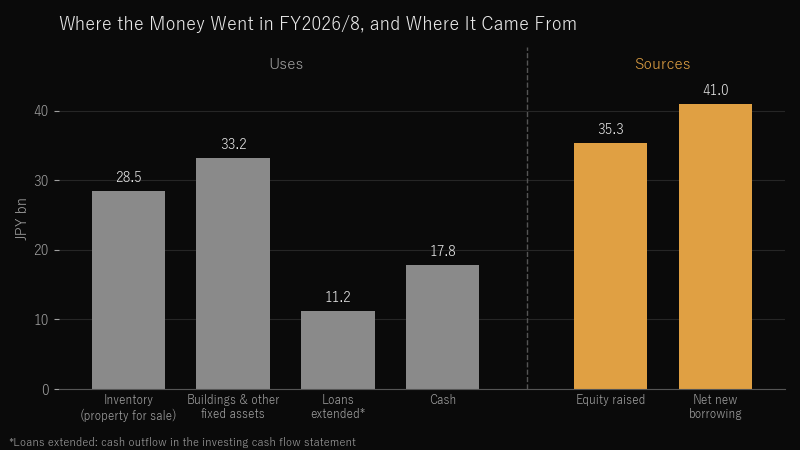 Figure 3: Main asset increases and funding sources in FY2026/8 (earnings filing).
The fixed-asset increase stands out for a company that markets itself as asset-light. Together with JPY 11.2 billion of loans extended, it raises a question the earnings filing does not answer: how much of the company’s own money remains inside the businesses it has nominally sold.
Most buyers are inside the group
Hotels go to Kasumigaseki Hotel REIT, listed in August 2025. The company is its sponsor, and its asset manager is a subsidiary. The REIT’s stated policy is to acquire properties continuously from the sponsor and from funds in which the sponsor’s group invests or is involved in developing.
The REIT then leases its hotels to fav hospitality group, also a Kasumigaseki Capital subsidiary. In the REIT’s first half, all of its operating revenue came from that single tenant. For the period to July 2026, the REIT forecast 82% of rent as fixed rent or minimum guarantees, with only 18% linked to hotel performance.
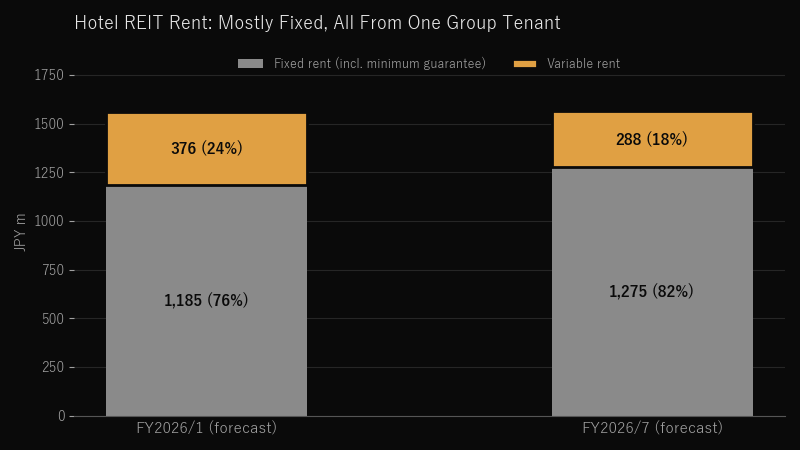 Figure 4: Kasumigaseki Hotel REIT rent forecast (interim results, period ending January 2026).
The REIT’s distribution therefore depends less on how well the hotels trade than on whether a group company can keep paying fixed rent. Kasumigaseki Capital reports a single segment, so outsiders cannot see whether that operating subsidiary earns its rent. Individuals and others hold 46.8% of the REIT’s units. The sponsor does not appear among the top ten unitholders, which implies a stake below 1%. Unitholders, including retail investors, are the ones exposed if property values fall.
Two readings
The structure supports two interpretations. The generous reading is that this is an efficient, capital-light model: equity raised goes to land as disclosed, and REIT payouts are covered by rent. The skeptical reading is that profits are pulled forward, growth depends on continuous equity and debt raising, and if the operating subsidiary loses money, group funds could be supporting the REIT’s rent. Current disclosure does not settle which is closer to the truth. That gap is itself a risk for investors, and a price-earnings ratio under 8 suggests the market is discounting it.
What to check in November
The annual securities report is due in late November. Six items will show which reading is closer:
- Gross profit mix for FY2026/8: whether recurring fees are rising as a share.
- The JPY 33.2 billion fixed-asset increase: which properties the company is holding, and why.
- Loans and fund stakes: who received the JPY 11.2 billion in loans, and what appears in related-party disclosures.
- Operating subsidiaries: whether any results for fav hospitality group are disclosed.
- Inventory: when and to whom the accumulated property for sale will be sold to reach the FY2027 profit target.
- The REIT: actual variable rent, when fixed-rent periods end, any shift in unitholders, and leverage (currently 47.0% of assets).
The business is sound and socially useful, and the company uses financial structuring to scale it as fast as possible. The real risk is in operations, and outsiders cannot yet see how well those operations perform. November’s filings are the first real chance to find out.
Source: Kasumigaseki Capital FY2026/8 earnings filing (TDnet) | Kasumigaseki Capital Q2 FY2026/8 results presentation (TDnet) | Kasumigaseki Capital: first data center project (TDnet) | Kasumigaseki Hotel REIT interim results, period ending January 2026 | Kasumigaseki Hotel REIT: major unitholders | Nikkei: Kasumigaseki Capital shares limit-down on JPY 39bn offering | 日本語版
Disclaimer | This article is for informational purposes only and does not constitute investment advice.