params: ticker: “TSE:5805” reviewed: “edit” image: “/images/analysis/swcc-split-is-not-the-story/thumb.png”
SWCC (5805), a mid-tier Japanese wire and cable maker, announced a 5-for-1 stock split on August 31 — record date September 30, effective October 1. On its own, a split changes nothing: shareholders end up with five times the shares at one-fifth the price, and SWCC was explicit that the underlying dividend value is unchanged (annual ¥311 per pre-split share either way). What the split actually tells you is simpler: the stock had already run up enough, after an 80.4% operating profit beat in the quarter reported on August 7, that management felt the price needed to come down to stay accessible to retail investors. The split is a lagging confirmation of strength already shown — not new information.
The more interesting number is buried in a regional breakdown most readers will skip past.
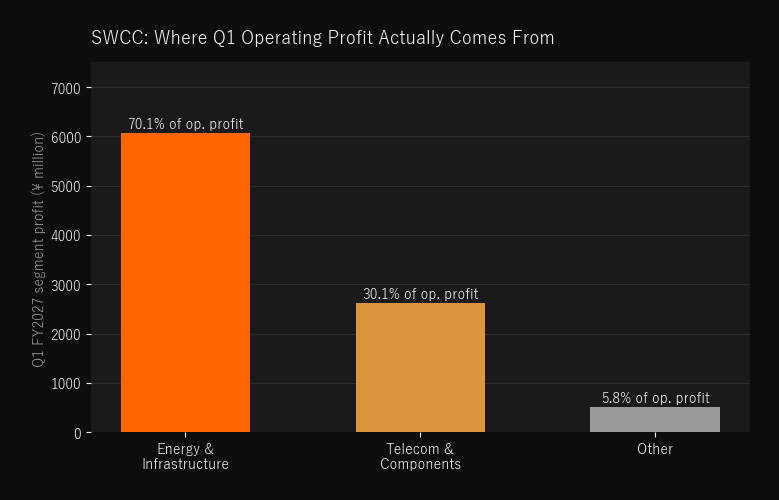 Figure 1: Where SWCC’s Q1 operating profit actually comes from, by segment
Two growth engines, doing very different jobs
SWCC’s Q1 (April-June) was genuinely strong across the board: revenue ¥77.7 billion (+24.9% YoY), operating profit ¥8.7 billion (+80.4%), net profit ¥5.7 billion (+92.2%). It’s driven by two segments pulling in the same direction for different reasons.
Energy & Infrastructure (revenue ¥33.6 billion, +22.8%; segment profit ¥6.1 billion, +77.2%) is the one doing the heavy lifting: on an 18.1% segment margin, it accounts for roughly 70% of consolidated operating profit despite being only 43% of revenue. It rides Japan’s aging power grid — utilities replacing decades-old substation equipment and reinforcing transmission networks, with SWCC’s strategic SICONEX® product capturing share on the back of a production-capacity expansion. This is about as un-glamorous and structurally durable a growth driver as exists in Japanese industrials: infrastructure doesn’t get younger, and this replacement cycle has years left in it.
Telecom & Components (revenue ¥41.9 billion, +27.2%; segment profit ¥2.6 billion, +86.0%) is actually the larger segment by revenue, but runs a much thinner 6.2% margin and contributes only about 30% of consolidated operating profit. Its e-Ribbon® communication cable, after a production-capacity buildout, is now shipping into booming US data center demand — the clearest link to the “Other” region growth below. The filing also mentions probe pins for semiconductor test equipment riding the same generative-AI semiconductor cycle benefiting companies like Tri Chemical (covered in a companion piece today), but SWCC doesn’t break out how much of this segment is cable versus probe pins, so it’s worth noting as a tailwind without overstating its size.
The number worth watching: 2.8% of revenue, up 584%
SWCC discloses revenue by customer region: Japan, Asia, and “Other.” Japan still dominates at 87.3% of Q1 revenue (¥67.8 billion) — this is, first and foremost, a domestic infrastructure story, with almost none of the China concentration risk that shows up elsewhere in Japan’s export-facing industrials. Asia sits at 9.8%.
“Other” — the bucket that would catch the US and Europe — is still tiny at 2.8% of revenue. But it grew from ¥323 million to ¥2.21 billion, a 584% increase in a single year. That’s almost certainly the e-Ribbon US data center business showing up in the numbers for the first time at meaningful scale. A rounding error this quarter; potentially the fastest-growing part of the business if the AI data center buildout continues at anything close to its current pace.
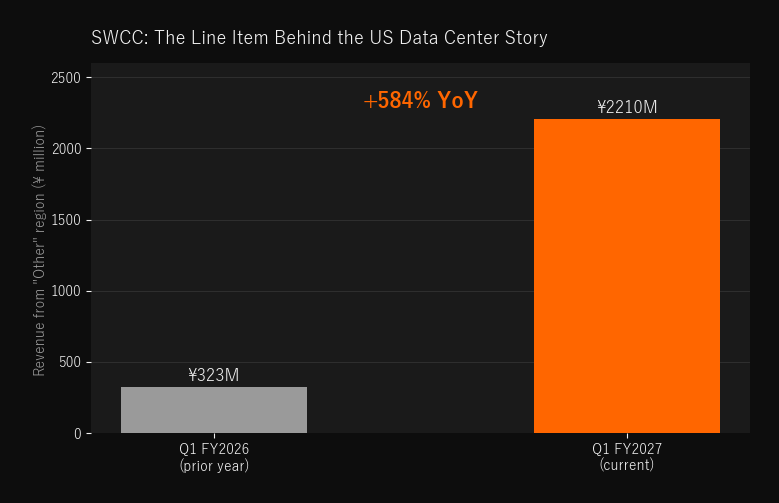 Figure 2: The small line item behind SWCC’s US data center exposure
A quiet exit worth noting
One more thing buried in the filing: SWCC has decided to withdraw from its seismic-isolation (免震) business, moving it out of the Energy & Infrastructure segment and into the catch-all “Other” category due to reduced materiality. Third-party company profiles (including the one we use as a data source) still describe SWCC as having particular strength in seismic-isolation products — that description is now out of date. It’s a small business being wound down, not a major strategic pivot, but it’s a reminder that a company’s public profile can lag its actual current mix by a filing or two.
What to watch
- Whether “Other” keeps compounding. A 584% growth rate on a ¥323 million base is easy; sustaining rapid growth once the US data-center cable business is no longer starting from near-zero is the real test.
- The power-infrastructure replacement cycle’s duration. This is the segment doing the heavy lifting on absolute profit today — its multi-year runway is the more load-bearing assumption than any single quarter’s AI-adjacent headline.
- No fresh information from the split itself. Don’t read the timing as a new catalyst — it’s a mechanical response to a share price that had already moved on information from three weeks earlier.
Source: Q1 earnings filing (TDnet) | Guidance & dividend revision (TDnet) | Stock split announcement (TDnet) | 日本語版
Disclaimer | This article is for informational purposes only and does not constitute investment advice.